SEOUL, South Korea, May 22, 2026 /PRNewswire/ -- KT SAT announced that it participated in the Space Industry Forum (SIF), a global space and satellite industry event held during Asia Tech x Singapore, Asia's largest ICT exhibition, where the company shared its perspective on the rapidly evolving satellite communications market and KT SAT's future strategic direction.
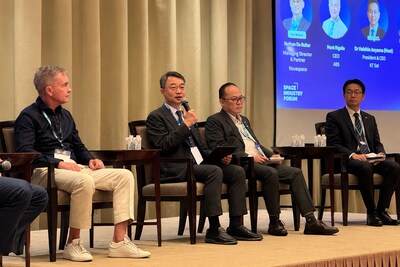
During a panel session titled "Satellite Operators at a Crossroads: Scale, Strategy, and Differentiation," Kevin Kyeong-il Choi, President & CEO of KT SAT, explained that "the satellite industry is rapidly shifting from a traditional GEO-based capacity business toward a managed service model built on multi-orbit connectivity. "He further emphasized that "in the 6G era, the integration of terrestrial and satellite networks will become essential, while the importance of sovereign connectivity for national security and communications sovereignty will continue to grow." He added, "KT SAT is evolving beyond a simple satellite capacity provider into a Total Space Solution Provider."
In particular, Choi identified three major keywords that will define the future satellite market: Sovereignty, Mobility, and Universal Connectivity. "Countries will increasingly demand independent sovereign networks," he said. "In the future, cooperation among globally interconnected sovereign networks will become increasingly important." He also noted that "in the AI era, a fully connected environment linking all people and devices will become essential, but at the same time, the digital divide could become even more severe." He added, "KT SAT is pursuing a vision of 'Space for Humanity,' providing equal connectivity opportunities for all people."
To respond to these market changes, KT SAT is strengthening its multi-orbit strategy by integrating and operating various satellite and terrestrial networks.
"Customers do not distinguish between GEO, LEO, or MEO," Choi explained. "What customers truly want is seamless connectivity." He continued, "Through XWAVE-ONE, our SD-WAN-based integrated connectivity solution, KT SAT is already operating multiple satellite and terrestrial networks together and providing services to hundreds of vessels."
Choi concluded by emphasizing that "the most important competitive advantage in the future will not simply be satellite ownership itself, but the operational capability to integrate diverse networks and services to deliver optimized connectivity for customers." He added, "Based on global partnerships, KT SAT will continue contributing to the development of a next-generation sovereign connectivity ecosystem."
Meanwhile, through its exhibition booth, KT SAT introduced several next-generation technologies and solutions, including:
The company drew significant attention from global customers attending the event.
Photo - https://mma.prnewswire.com/media/2983915/photo.jpg
 View original content:https://www.prnewswire.co.uk/news-releases/kt-sat-evolves-into-a-total-space-solution-provider-presenting-the-vision-of-space-for-humanity-302779716.html

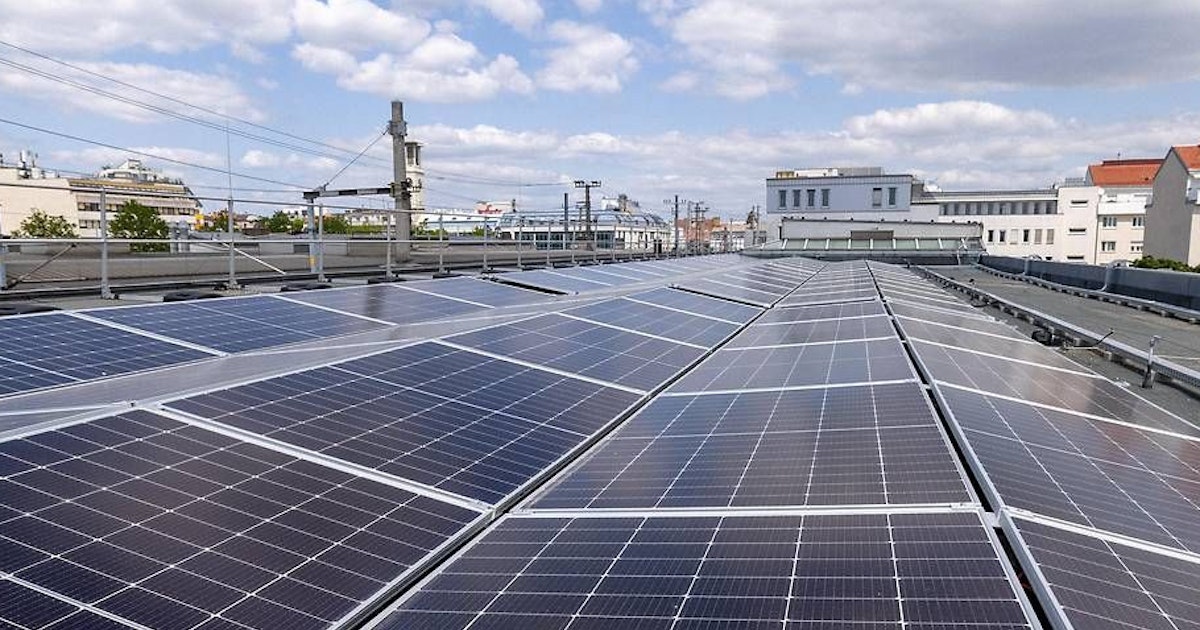
Die Stadt Wien startet ein neues Förderprogramm für Photovoltaik-Anlagen und richtet den Fokus dabei klar auf bisher ungenutzte Flächen im dicht bebauten Stadtgebiet. Ab 4. Mai 2026 stehen dafür 7 Millionen Euro bereit. Gefördert werden vor allem innovative und multifunktionale Anlagen, die technisch anspruchsvoller oder kostenintensiver sind als klassische Aufdachlösungen – etwa Installationen an Gebäudefassaden oder auf Dachgärten.
Mit dem Paket verfolgt die Stadt mehrere energiepolitische Ziele. Der Ausbau klimafreundlicher Stromerzeugung soll beschleunigt und die Abhängigkeit von ausländischen Energielieferanten verringert werden. Gleichzeitig zielt Wien darauf ab, langfristig mehr Kontrolle über die Energiepreise zu gewinnen. Klimastadtrat Jürgen Czernohorszky (SPÖ) verweist in diesem Zusammenhang auf den geplanten Ausstieg aus Gas und Öl und bezeichnet Sonnenstrom als zentrale Säule für mehr Energieunabhängigkeit und eine klimafreundliche Zukunft.
Die Stadt reagiert damit auch auf Marktveränderungen: Die Kosten für klassische Aufdachanlagen und Speicher sind zuletzt deutlich gesunken, viele Projekte amortisieren sich bereits nach wenigen Jahren. Die Förderung wird daher nun gezielt auf komplexere Vorhaben verlagert. Unterstützt werden künftig vor allem Fassaden-PV-Anlagen sowie Photovoltaik auf Dachgärten, sofern diese öffentlich, öffentlich zugänglich oder gemeinschaftlich genutzt werden. Bis zu 30 Prozent der förderfähigen Kosten können übernommen werden.
Parallel dazu bleiben bestehende Förderschienen bestehen. Programme für PV-Anlagen im mehrgeschoßigen Wohnneubau, auf Flugdächern und auf Gründächern haben sich nach Darstellung der Stadt bewährt und werden bis 2027 weitergeführt. Insgesamt soll der Ausbaupfad damit abgesichert werden: Bis 2030 strebt Wien eine installierte PV-Leistung von 800 Megawatt Peak (MWp) an – genug, um nach Angaben der Stadt rund ein Viertel aller Wiener Haushalte mit Sonnenstrom zu versorgen.
Um die Nachfrage anzukurbeln und Projekte zu erleichtern, baut Wien auch sein Beratungs- und Serviceangebot aus. Bürgerinnen, Bürger und Betriebe können sich kostenlos informieren, wie sich der Umstieg auf Sonnenstrom konkret umsetzen lässt. Beratungen sind telefonisch oder per Video-Call möglich und können online gebucht werden; weitere Details zum Förderpaket und zum erweiterten Informationsangebot stellt die Stadt ab 4. Mai auf sonnenstrom.wien.gv.at bereit.